The Alpine 101: What Exactly Is "The Alpine" at Whistler Blackcomb?
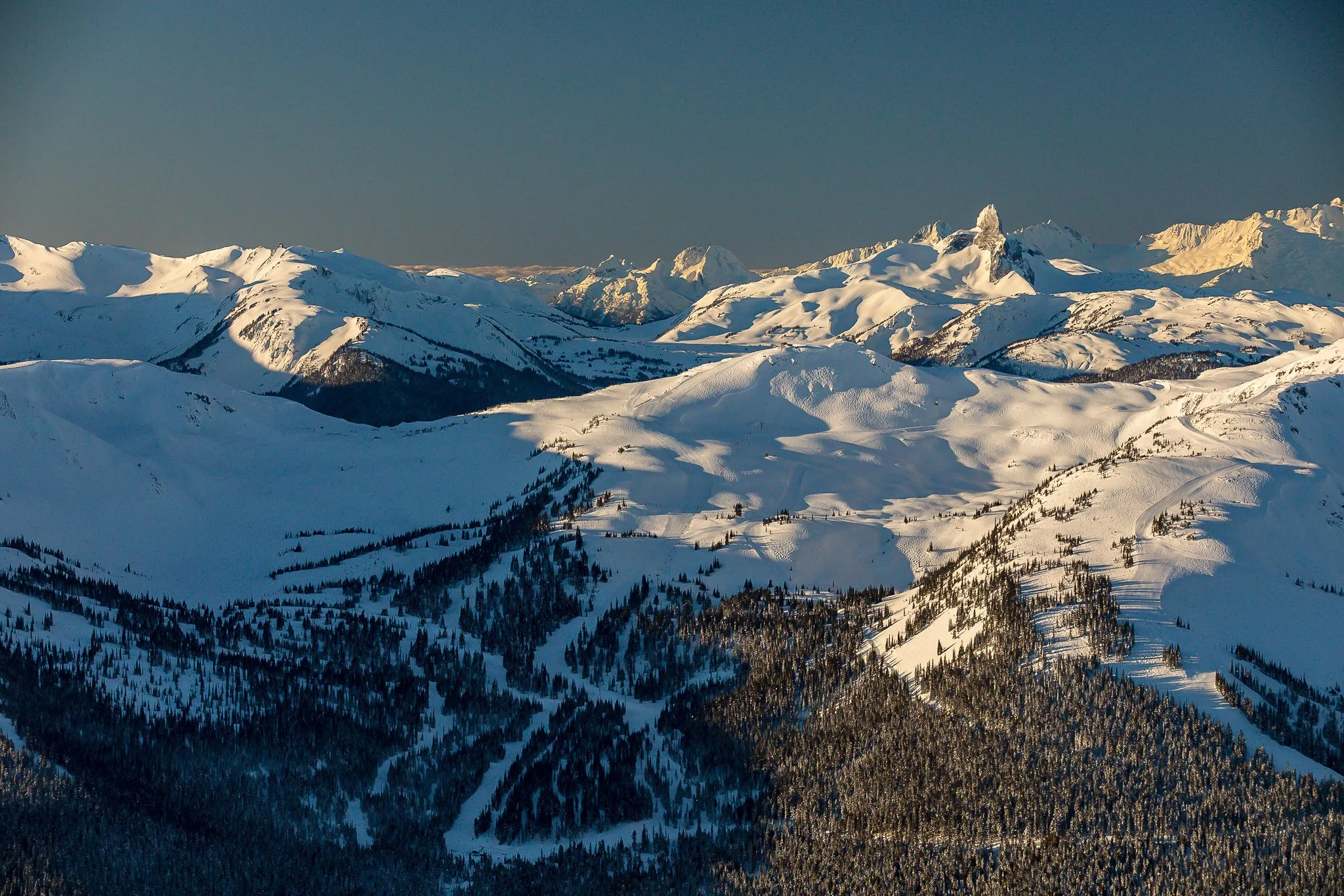
The alpine terrain of Whistler Mountain from Flute Bowl on the far left to Harmony Ridge on the far right.
If you’ve spent five minutes in the Village, you’ve probably heard someone say, "The Alpine is holding out," or "Peak is finally open." To a first-timer, it sounds like some exclusive club. In a way, it is.
At Whistler Blackcomb, "The Alpine" isn't just a location, and it’s certainly not a lift… It's a completely different environment. Here’s the local breakdown of what it is, which lifts take you there, and why it matters for your ski day.
Treeline: Where everything changes
To understand the alpine, you first have to understand the treeline. In the Pacific Northwest, trees generally stop growing at around 1,900 meters (6,200 feet). Below that, you’re in the "sub-alpine"—think glades, sheltered runs, and visibility even when it’s snowing.
Above that line? That’s the alpine. It’s a moonscape of wide-open bowls, massive rock faces, and 360-degree views of the Coast Mountains. It’s where you’ll find the steepest chutes and the most consistent "good" snow, but it's also where the weather gets real, real fast.
The "Alpine Lifts": Your Ticket to the Top
Not every chairlift is created equal. If you want the true high-country experience, these are the chairs you’re looking for:
On Whistler Mountain:
Peak Express: The crown jewel. It takes you to the literal summit of Whistler Mountain (2,182m). It’s home to the iconic "Air Jordan" line and the gateway to Whistler Bowl.
Harmony 6 Express: High-speed access to Harmony Bowl. Expect wide-open rollers and some of the best intermediate-to-expert terrain on the map.
Symphony Express: The furthest reach of the boundary. It’s a bit of a trek to get there, but it offers a more remote, "backcountry lite" feel.
On Blackcomb Mountain:
7th Heaven Express: Aptly named. On a sunny day, there is nowhere better. It’s an expansive, south-facing bowl that feels like you're skiing in a postcard.
Glacier Express: This provides access to the Blackcomb Glacier and the Spanky’s Ladder entrance. It’s high, it’s cold, and it’s spectacular.
Crystal Ridge Express: This one is "Alpine-adjacent." While the chair itself stays mostly in the trees, it services the edge of the high country. It’s often the go-to when the higher lifts are closed due to wind or visibility.
Why Does "Alpine Status" Matter?
You’ll notice on the Whistler Blackcomb app or the big boards at the base that alpine lifts often have a different status than the lower chairs.
Weather Delays: The alpine is exposed. If there’s a 100km/h wind gust, the Peak Chair isn't running. This is generally best for our safety and comfort…
Avalanche Risk: Because the terrain is so steep and open, the Ski Patrol team needs time to perform Avalanche Control after a big storm. If we get 30cm of fresh overnight, don't expect the alpine to open at 8:30 AM. They need to make it safe first. You’ll hear the bombs echo through the valley which is always a sure sign of a good day to come.
Visibility: When a cloud sits on the mountain, the alpine becomes a giant bowl of milk. Without trees to provide contrast, it’s very easy to lose your sense of direction. If you have been skiing Whistler Blackcomb for years, this doesn’t matter as much and you can still poke around, but trying to find new terrain in these types of conditions can be VERY dangerous. Cliff bands and closed areas are fairly easy to wander into when you can’t see more than five feet in front of you.
When is it open? The Alpine Season
The alpine never opens on day one of the season. Usually, we need a solid "base" of snow to cover the massive rocks and crevasses. Depending on the year, the high country usually starts cracking open in mid-to-late December. It does typically stay open through to closing day and some of the best spring turns can be found in the alpine terrain.